
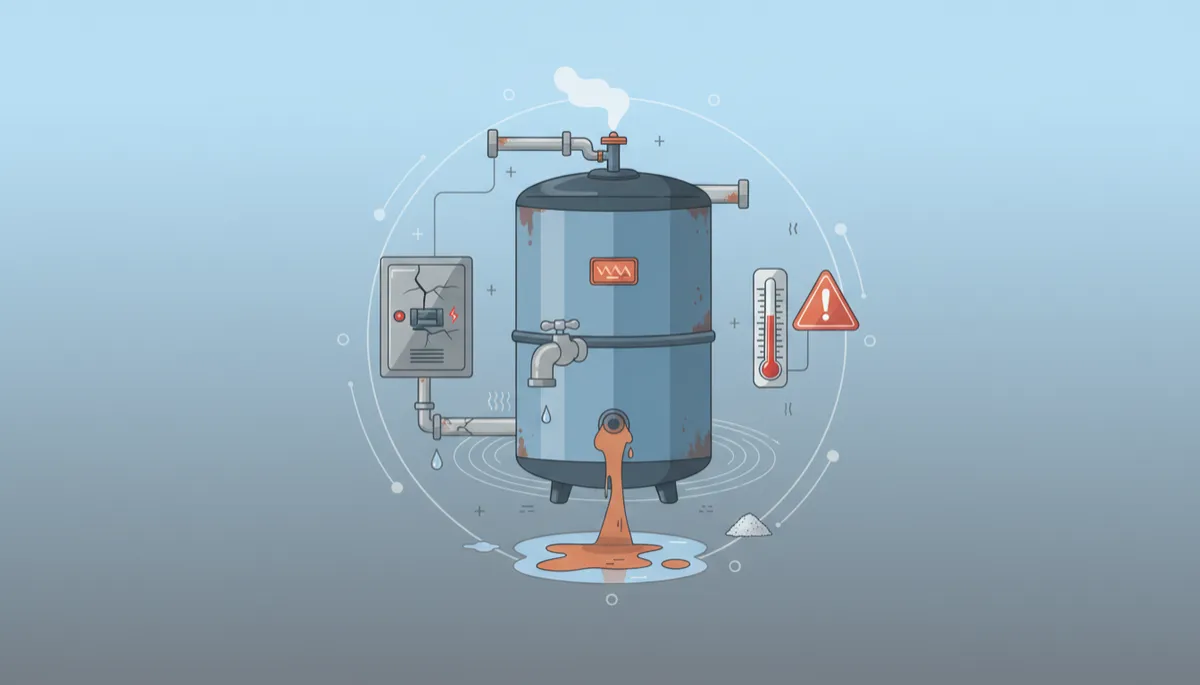
Hot Water Tank Warning Signs to Never Ignore
Home Maintenance, Hot Water Tanks
Hot Water Tank Warning Signs You Should Never Ignore
Your hot water tank quietly works in the background—until something goes wrong. Recognizing early warning signs can help you avoid cold showers, costly repairs, and even potential water damage in your home.
1. Inconsistent or Insufficient Hot Water
One of the earliest hot water tank warning signs is a change in water temperature. If your showers suddenly turn lukewarm, fluctuate between hot and cold, or run out of hot water faster than they used to, your tank may be struggling. This can point to issues such as a failing heating element, a malfunctioning thermostat, or heavy sediment buildup at the bottom of the tank that prevents efficient heating.
2. Strange Noises Coming from the Tank
Popping, banging, rumbling, or crackling sounds are not normal. Over time, minerals and sediment collect at the bottom of the tank. When the burner or heating element warms the water, trapped sediment can cause these loud noises. Left unchecked, this buildup forces your tank to work harder, which can shorten its lifespan and increase your energy bills. Persistent noise is a clear sign it’s time for a professional inspection and likely a thorough flush—or, for older units, a replacement.
3. Discolored, Cloudy, or Rusty Water
If the hot water from your taps looks brown, yellow, cloudy, or has tiny particles floating in it, your hot water tank could be corroding from the inside. Rusty water is often a sign that the protective anode rod is worn out and the metal tank itself is starting to deteriorate. This not only affects water quality but also increases the risk of leaks and eventual tank failure. Discoloration that appears only when using hot water, not cold, usually points directly to the tank as the source of the problem.
4. Leaks, Moisture, or Corrosion Around the Tank
Any visible water around your hot water tank should be taken seriously. Small puddles, damp spots, or even a constant “sweating” appearance on the outside of the tank can signal trouble. Leaks may come from loose connections, failing valves, or internal corrosion that has eaten through the tank wall. Even minor leaks can quickly lead to mold, damaged flooring, and structural issues if ignored. Corrosion on pipes, fittings, or the tank base is another red flag that the system is nearing the end of its useful life.
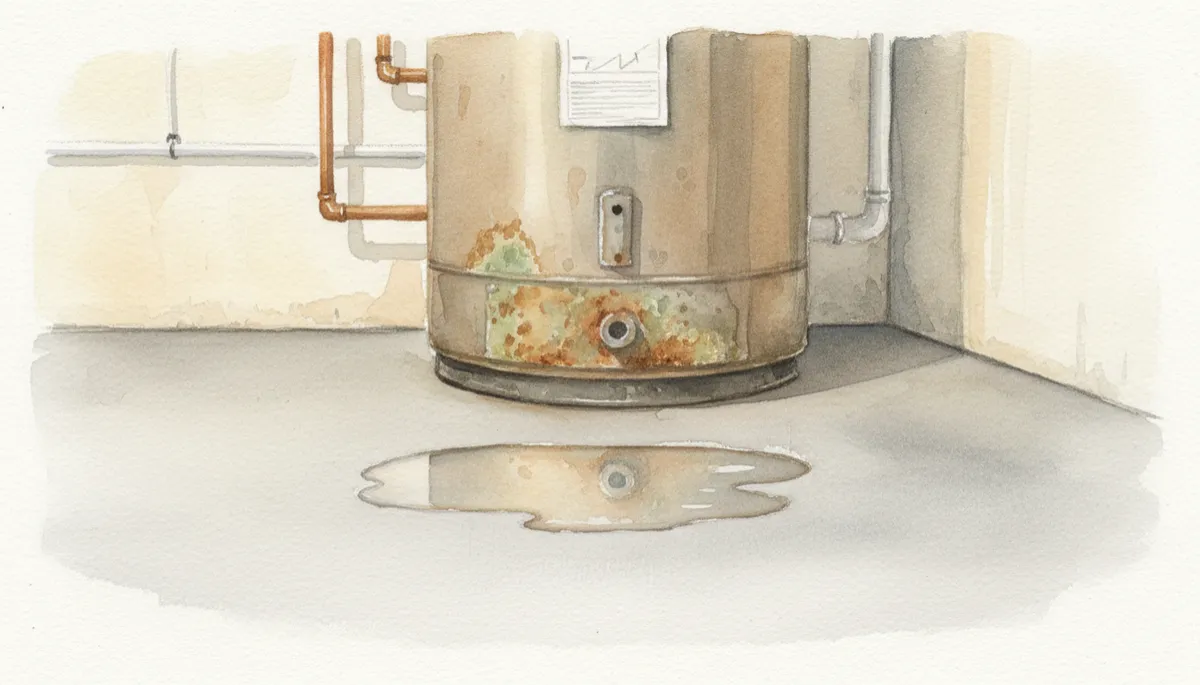
Even small puddles near your tank can signal serious internal corrosion.
5. Unusual Smells or Metallic Tastes
A rotten egg odor or metallic taste in your hot water is another important warning sign. Sulfur-like smells can indicate bacteria growth inside the tank, often related to the anode rod reacting with minerals in the water. Metallic or bitter tastes may suggest corrosion or high mineral content. While some issues can be resolved with cleaning or replacing the anode rod, persistent odors or tastes should always be evaluated by a qualified plumber to rule out health and safety concerns.
6. Age of the Hot Water Tank and Rising Energy Bills
Most traditional hot water tanks last around 8–12 years, depending on usage and maintenance. If your unit is approaching or past this range, it’s wise to be extra alert to any of the warning signs above. An aging tank often becomes less efficient, which you may notice as slowly increasing energy bills, longer heating times, or the need for frequent repairs. At a certain point, investing in a modern, energy-efficient replacement is more cost-effective—and far safer—than continuing to patch an old system.
When to Call a Professional
Hot water tank problems rarely fix themselves, and delaying repairs can turn a small issue into an emergency. If you notice any combination of inconsistent hot water, strange noises, discoloration, leaks, or unusual smells, schedule a professional inspection as soon as possible. A licensed plumber can assess whether a repair, tune-up, or full replacement is the safest option, helping you protect your home, your budget, and your peace of mind.


